


From Bukidnon to Beyond:
The Growing Story of Varacco Smart FARM
From a Farmer-Centered Nursery to a Platform for Knowledge, Innovation, and Sustainable Agriculture
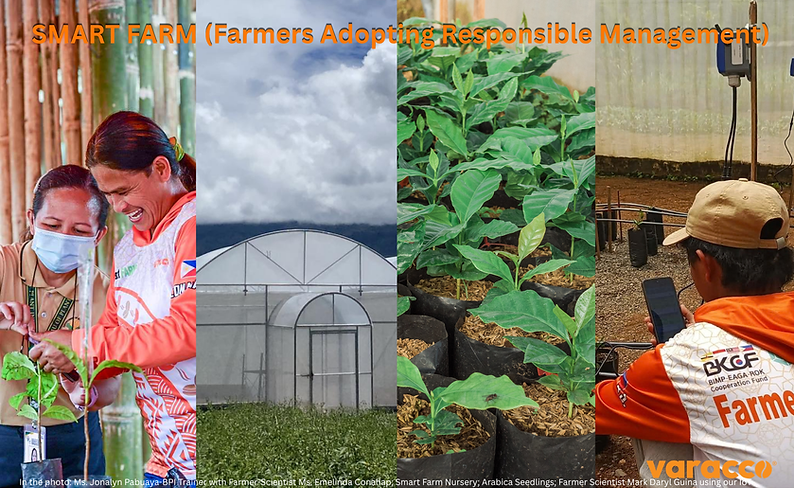
In July 2024, Varacco began the Smart FARM Nursery Project in Bukidnon with a goal that went beyond building a technologically enabled coffee nursery. The project was designed to empower farmers through knowledge, technology, and practical skills while exploring how sustainable and data-driven approaches could strengthen coffee farming communities.
At the center of the initiative is a simple but important idea: the nursery is not the only “smart” component—the farmer is.
Technology such as the Internet of Things (IoT), biosensing, and data-driven farming can provide valuable information, but these tools become meaningful when farmers have the knowledge and confidence to understand and use them. For this reason, Smart FARM places strong emphasis on capacity building and the development of Farmer-Scientists.
Through training, hands-on activities, knowledge sharing, and practical application, farmers are introduced to nursery management, plant nutrition, pest and disease management, horticulture, and agricultural technology. The knowledge gained can also be applied beyond coffee to other crops and farming activities.
This farmer-centered approach has become one of the defining elements of the Smart FARM journey.
Expanding the Conversation Across Bukidnon
The Smart FARM story began reaching beyond its immediate project community in October 2024. Through an opportunity facilitated by former Pangantucan Tourism President Lea Apal, together with San Antonio Filipino American Chamber of Commerce President Chona Day and her team, Varacco visited several municipalities in Bukidnon, including Pangantucan, Libona, Manolo Fortich, Lantapan, Kitaotao, and Impasug-ong.
The team also engaged with Indigenous communities, including the Talaandig, introducing the Smart FARM concept to local government leaders, communities, and other stakeholders.
These conversations focused on farmer empowerment, knowledge sharing, technology, and sustainable agricultural practices. In Manolo Fortich, for example, discussions included the possibility of using government-owned land as a potential nursery site.
What started as a project rooted in Pangantucan was gradually becoming a wider conversation about farmer empowerment and smart agriculture across Bukidnon.
.png)
Bringing the Smart FARM Story to Wider Audiences
As the project developed, Varacco continued sharing its experiences through coffee events, academic institutions, development organizations, and sustainability platforms.
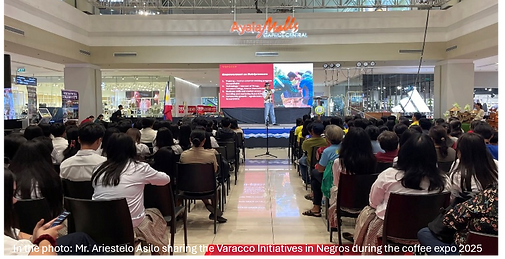
In November 2025, Varacco CEO and Founder
Ariestelo Asilo was invited to the Negros Coffee Expo 2025, where he shared knowledge and discussed the Smart FARM initiative in Bukidnon with the wider coffee community.
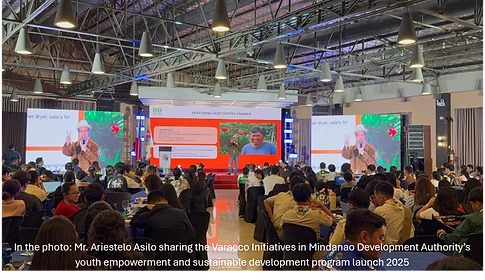
Later that month, Varacco participated in the Mindanao Development Authority's youth empowerment and sustainable development program launch and joined other organizations in signing the “Converge to Achieve” Manifesto. Smart FARM and the Coffee-based Farming and Entrepreneurship Engagement (COFFEE) program were presented within broader discussions on sustainable development in Mindanao.
.png)
On November 27, 2025, the Smart FARM story also reached the academic and management community through the 13th National Business and Management Conference at De La Salle University. Ariestelo Asilo delivered a keynote presentation on Varacco's coffee journey, while Information Technologist Mc Lean Bayasca presented the project's gamification approach.
These engagements helped demonstrate that Smart FARM was not only an agricultural project. It was also becoming part of conversations on responsible management, education, technology, and social innovation.
From Project Experience to Documented Knowledge
A significant milestone came on March 16, 2026, when Varacco's research paper, “Enhancing Climate Resilience and Coffee Nursery Management in Bukidnon: Empowering Indigenous Coffee Farmers through IoT-Based Technology and Capacity Building,” was published in the International Journal of Environmental and Rural Development (IJERD) through ISERD Tokyo, Japan.
The publication documented the experience of using IoT-based technology and capacity building to strengthen coffee nursery management and climate resilience among Indigenous coffee farmers in Bukidnon.
This represented an important step in the Smart FARM journey. The experience of the community was no longer being shared only through events and presentations; it was also being documented as knowledge that could reach a broader academic and development audience.
Connecting Smart FARM With Sustainability and Education
Throughout 2026, Varacco continued sharing the Smart FARM experience through universities, sustainability organizations, business communities, and agricultural platforms.
The initiative was discussed during the Nordic Chamber of Commerce of the Philippines Sustainability Committee Briefing, connecting Smart FARM with conversations on energy efficiency, climate-smart practices, IoT, data, and precision agriculture.
Varacco was also selected to participate in the UN Green Shift Initiative, providing another platform to connect lessons from its operations and Smart FARM activities with broader discussions on sustainable business practices.
.png)
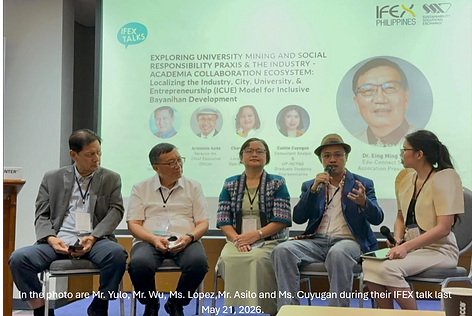
Other engagements included IFEX Talks 2026 Sustainability Sessions, the “Building Impact: Conversations with Philippine Social Innovators” session at the UP Virata School of Business, the AgriAsenso platform, and the DLSU Research Congress became part of conversations that extended beyond coffee farming—connecting agriculture with education, entrepreneurship, sustainability, technology, climate action, and inclusive development.
Reaching Sustainability and Business Networks
The visibility of the initiative continued throughout July and August 2026.
Varacco participated as a speaker in SustainabilitiEASE, a joint sustainability committee briefing involving business chambers and organizations. The team also shared its experience during the launch of the De La Salle Lipa Center for Sustainability and Impact.
On August 7, 2026, Varacco's work was featured in Tatler Asia through the article “What Coffee Can Teach Leaders About Building Better Food Systems.” The feature highlighted how rebuilding a value chain—from soil to livelihoods—can contribute to more resilient food systems.
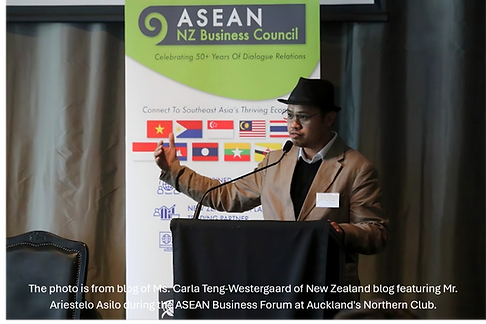
Later that month, Ariestelo Asilo participated in the ASEAN Business Forum in Auckland, New Zealand, where he shared perspectives on building relationships that go beyond transactions and recognizing the people and communities behind trade and business.
The story that began with a coffee nursery in Bukidnon was therefore reaching audiences beyond agriculture and beyond the Philippines.
.png)
From Visibility to New Connections
By September 2026, the continued sharing of Varacco's initiatives had created opportunities to connect with organizations working in sustainability, climate technology, and green growth.
On September 4, Varacco participated as a guest speaker in a Peer Learning Session on SME Sustainability and ESG Fundamentals, sharing the business case for sustainability among SMEs and agribusinesses.
.png)
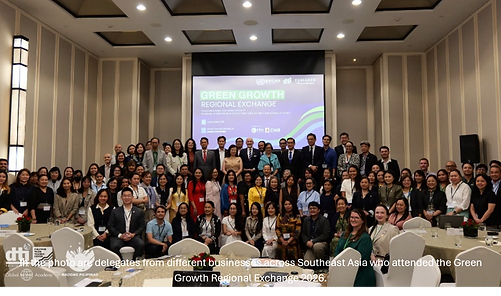
On September 14, Varacco participated as one of the 12 Philippine MSMEs in the UN ESCAP Green Shift Programme during the Green Growth Regional Exchange. The event brought together organizations including UN ESCAP, DTI-PTTC, First Gen Renewables (EDC), and Nestlé Philippines for knowledge sharing, technology exchange, and discussions around potential partnerships for greener and more sustainable supply chains.
For Varacco, the event provided another opportunity to connect the experiences gained from Smart FARM, coffee farming, sustainability, and community development with broader conversations about the green transition.
On September 17, Varacco also participated in the launch of the Climate Technopreneurship Programme as a BKCF grantee of GGGI. The event brought together climate innovation, technology, entrepreneurship, and sustainability.
The presence of the Talaandig community and Indigenous art during the event carried particular meaning because Bukidnon is where the Smart FARM journey is rooted. The convergence of Indigenous knowledge, agriculture, technology, and climate innovation reflected the broader direction of the initiative.
The event also opened opportunities for further connections, including the interest of GGGI Country Representative Marcel J. Silvius in visiting the Smart FARM site in Bukidnon.
A Growing Network Built Around Farmers
Over time, the continuous sharing of the Smart FARM Nursery Project has created a growing network of people and organizations interested in the initiative.
The project has engaged with:
-
Coffee farmers and Farmer-Scientists
-
Indigenous communities
-
Barangays and municipalities
-
Local government units
-
Universities and academic institutions
-
Researchers and educators
-
Agricultural organizations
-
Business chambers and private companies
-
Sustainability and development organizations
-
National and international partners
The initiative's visibility has also extended beyond Bukidnon and Mindanao, reaching communities and organizations in Luzon and the Visayas, as well as international audiences.
More Than Visibility
The importance of these engagements is not simply the number of events attended or organizations reached. Each platform has provided an opportunity to explain why the Smart FARM Nursery exists and what it seeks to change.
The central message remains consistent:
A smart nursery is not defined only by the technology installed in it. It is defined by the farmer who has the knowledge, skills, confidence, and decision-making capacity to use that technology and manage the farm.
Through capacity building, Varacco aims to develop Farmer-Scientists—farmers who observe, learn, analyze, experiment, make informed decisions, and apply what they learn to their own farms.
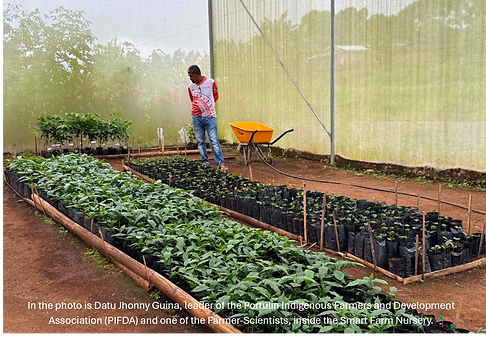
In this way, the Smart FARM approach connects technology with people, knowledge with action, and agriculture with sustainability.
From a Local Initiative to a Wider Conversation
The journey of Smart FARM demonstrates how consistently sharing a community-based initiative can create opportunities for connection and learning.
From conversations with farmers and local communities, to engagements with municipalities and Indigenous groups; from coffee expos and universities, to national conferences and sustainability platforms; and eventually to international exchanges on green growth and climate technopreneurship—the Smart FARM story has continued to move from one community to another.
These engagements have allowed Varacco not only to share its experiences, but also to listen, exchange ideas, discover new approaches, and build relationships that may contribute to stronger and more sustainable agricultural systems.
Ultimately, the visibility of the Smart FARM Nursery Project demonstrates how local innovation can create conversations beyond its original community.
What began in July 2024 as a farmer-centered smart nursery initiative in Bukidnon has grown into a platform for dialogue on farmer empowerment, Indigenous knowledge, technology, climate resilience, sustainability, social enterprise, and green development.
And at the center of that journey remain the farmers and communities who give Smart FARM its purpose.
-Jessa Celine Carabaca